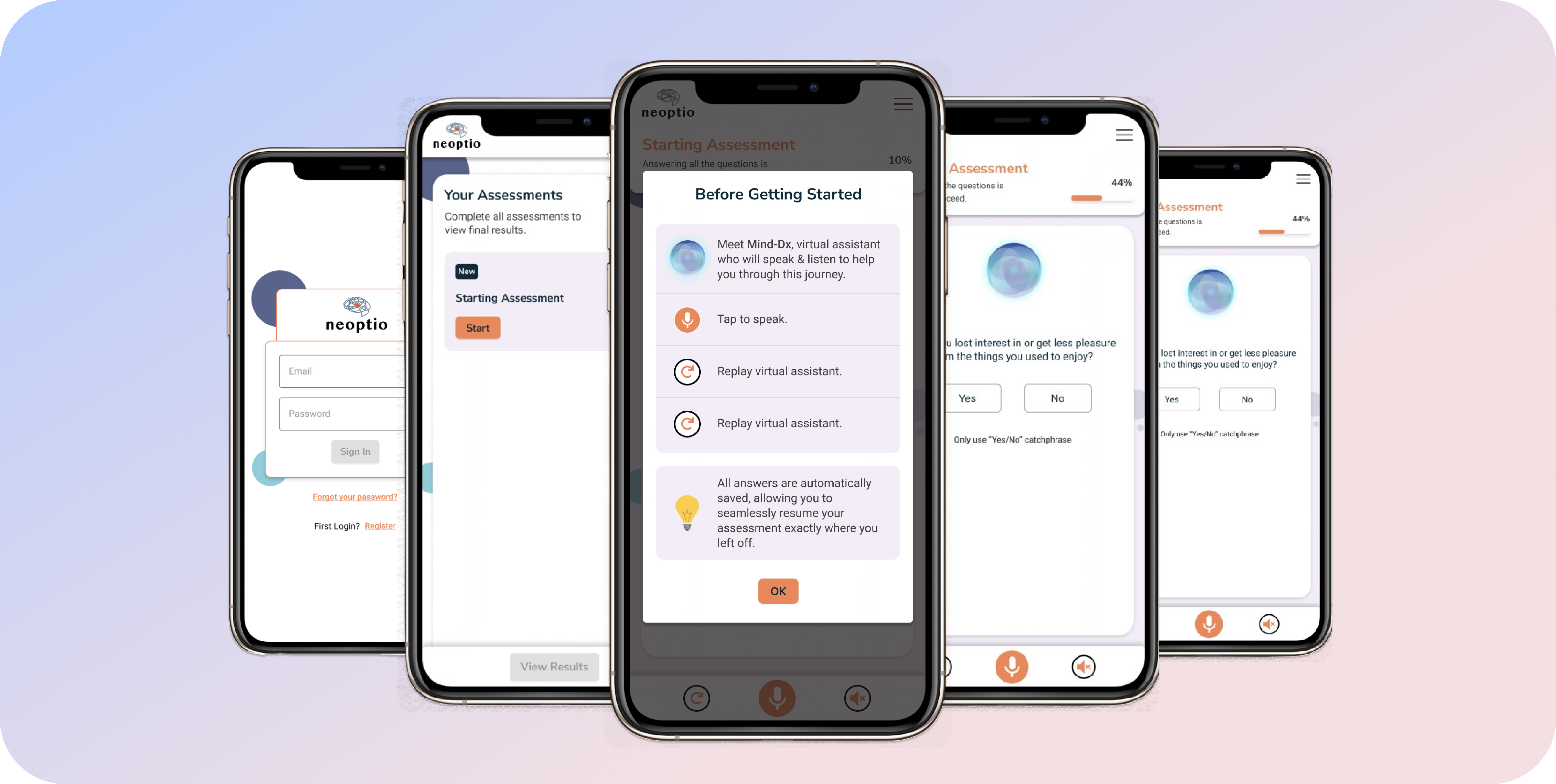
Neoptio
Based in Winnipeg, Online Business Systems has over 30 years of experience in Digital Transformation and Cybersecurity consultancy working with Clients in Canada, USA and EMEA.
Online Business Systems's Innovation Lab has partnered with a Venture Capital firm to develop Neoptio, an innovative AI-driven product in the healthcare industry. Neoptio offers professional online therapy with flexible scheduling and an easy sign-up process. This cutting-edge platform allows users to send messages to their therapists anytime, enhancing access to mental health support. This collaboration presents a significant opportunity to revolutionize mental health care, making therapy more accessible, convenient, and responsive to individual needs.
1. Challenge
Research shows that there is a need to address the challenges of accessibility, affordability, and stigma in mental health care by offering online therapy. It provides convenient, flexible, and private access to licensed therapists, making it easier for individuals to seek and receive mental health support from anywhere, at any time.
2. Personas
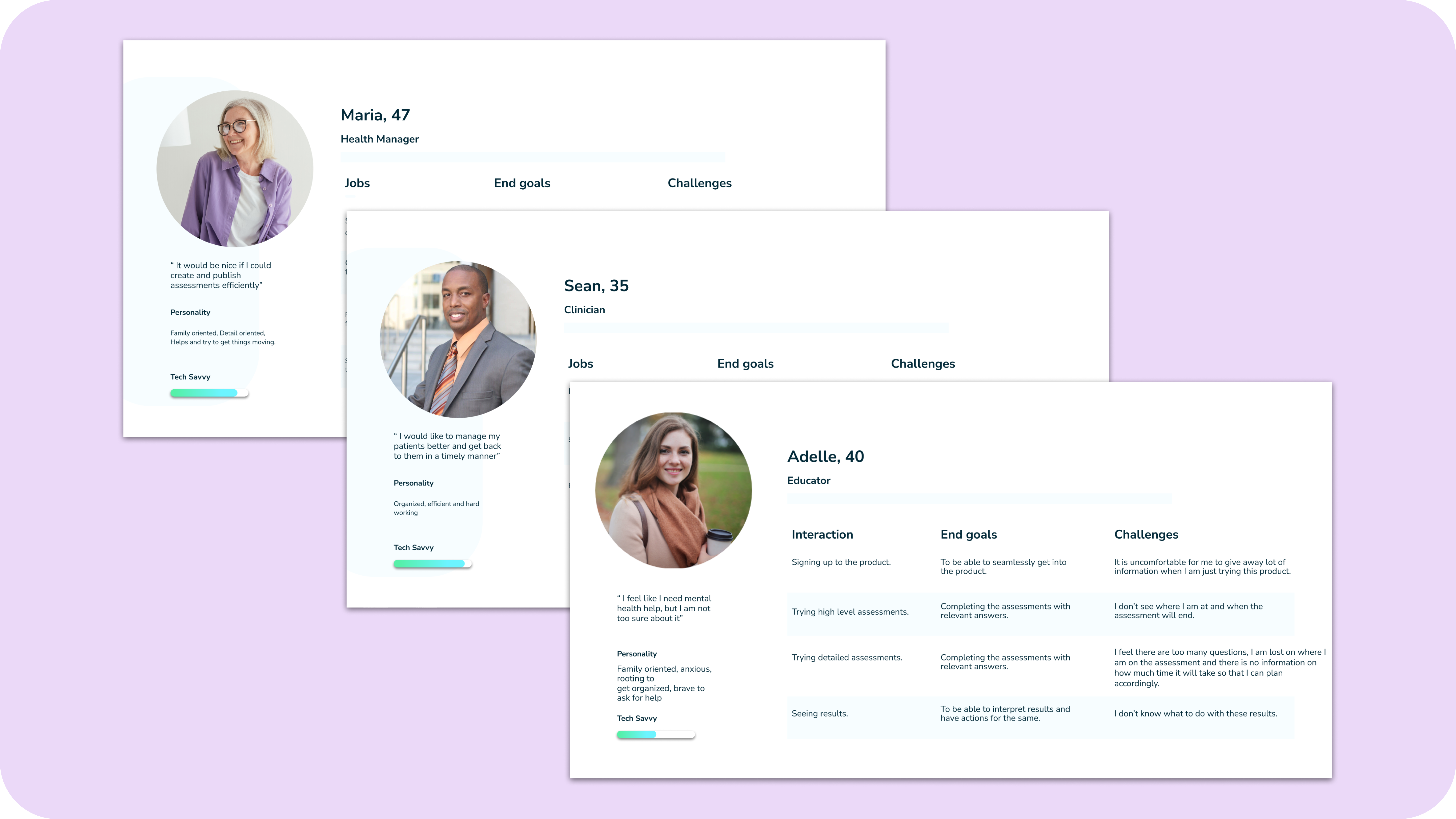
To understanding our target audience, we started by drafting personas which helps define a new design in a market by creating a clear, detailed understanding of target users. Personas helped us humanize the audience, guiding design decisions to cater to specific needs and preferences. They helped align team members on user goals, prioritize features, and enhance user experience by addressing pain points. This approach improved marketing strategies, predicting user behavior, and saved time by avoiding broad, ineffective solutions. By focusing on well-defined personas, we ensured the final product is relevant, valuable, and tailored to the intended market, leading to greater user satisfaction and success.
3. Solution
The goal of the platform and product is to alleviate strain in healthcare resources as well as provide more objective standardization for healthcare patients. Here is a structured approach we took to build the app.
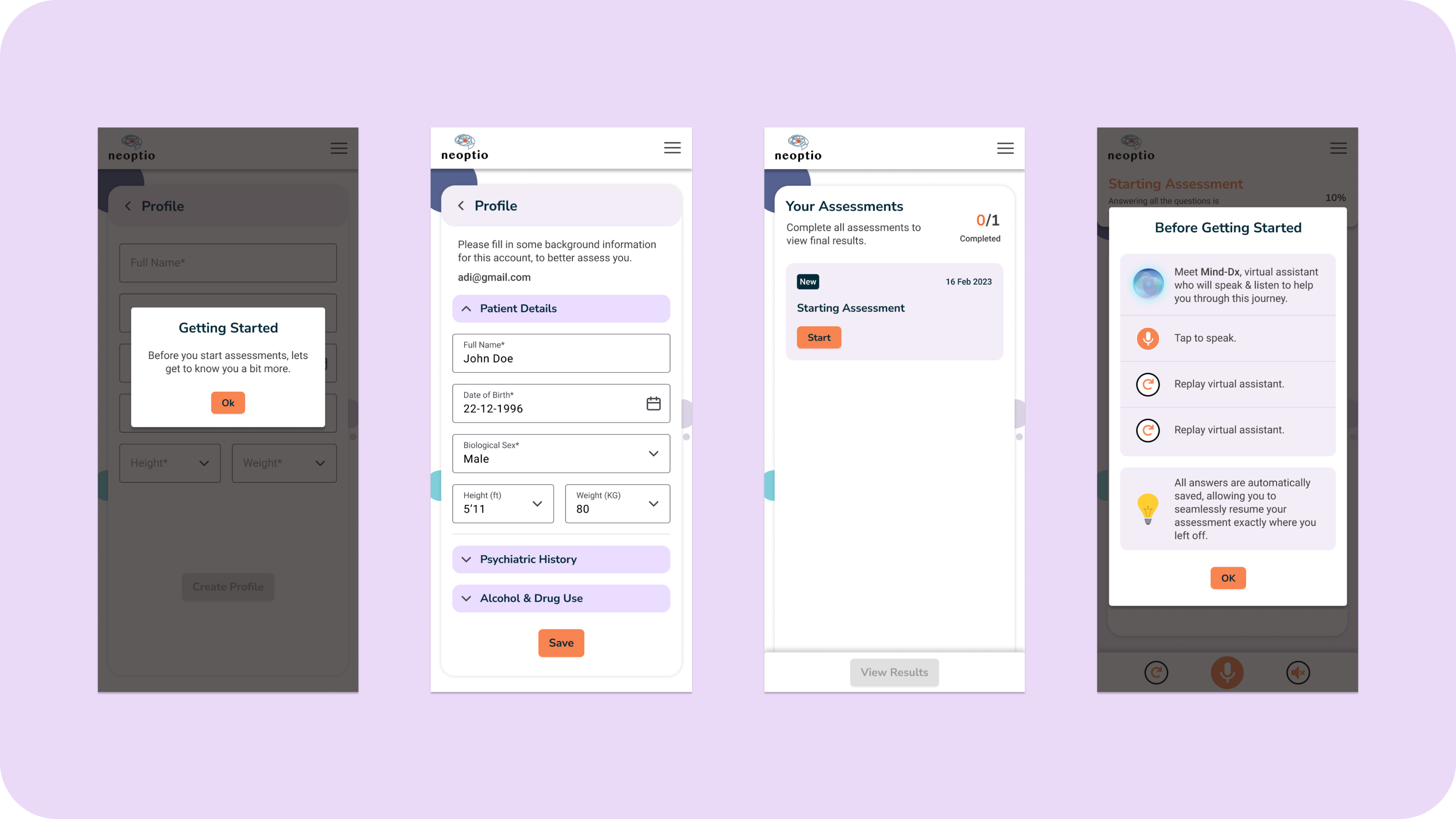
- 1. Onboarding and Profile Setup
- 2. Starting Assessment
- 3. AI-driven Assessment
- 4. Seamless Voice Experience
- 5. Accessibility and Inclusivity
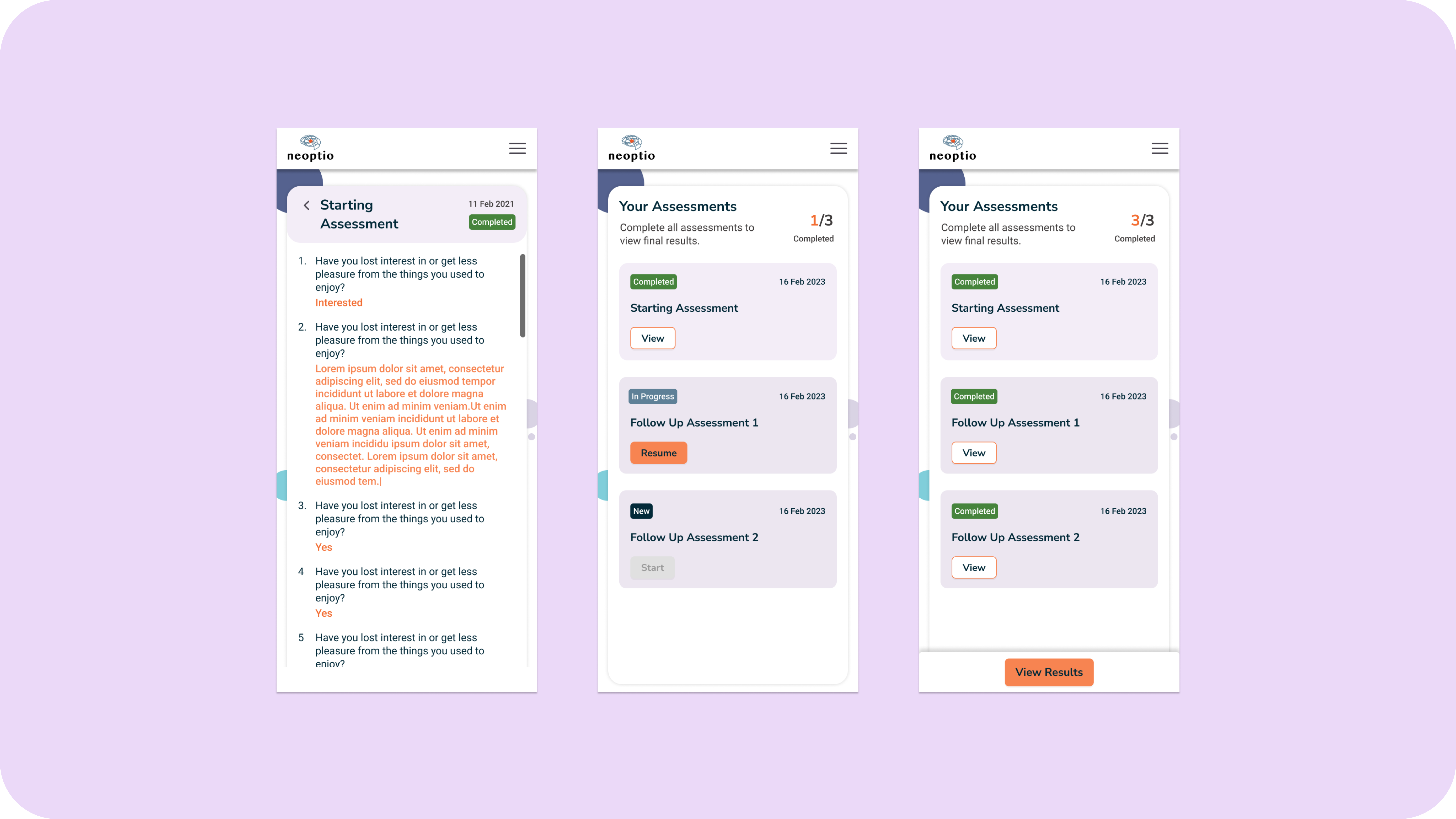
- 6. Results
Collect essential user information such as height, weight, age group, and any other relevant demographics or health-related data. Ensure this process is straightforward and requires minimal effort from the user.
Create clear instructions outlining the initial assessment's purpose. Design a user-friendly questionnaire with single-choice, multiple-choice, and optional descriptive questions. Include a progress indicator to track completion and enable users to save progress for later completion.
Utilize OpenAI analysis of user responses to generate personalized insights. Offer tailored recommendations post-assessment, suggesting further evaluations or initial insights into conditions like depression or anxiety based on the assessment results.
Enable hands-free operation for app navigation, assessment initiation, and feedback receipt via voice commands. Implement robust error handling and fallback mechanisms to gracefully manage misunderstandings or incorrect inputs during voice interactions, ensuring smooth user experience and functionality.
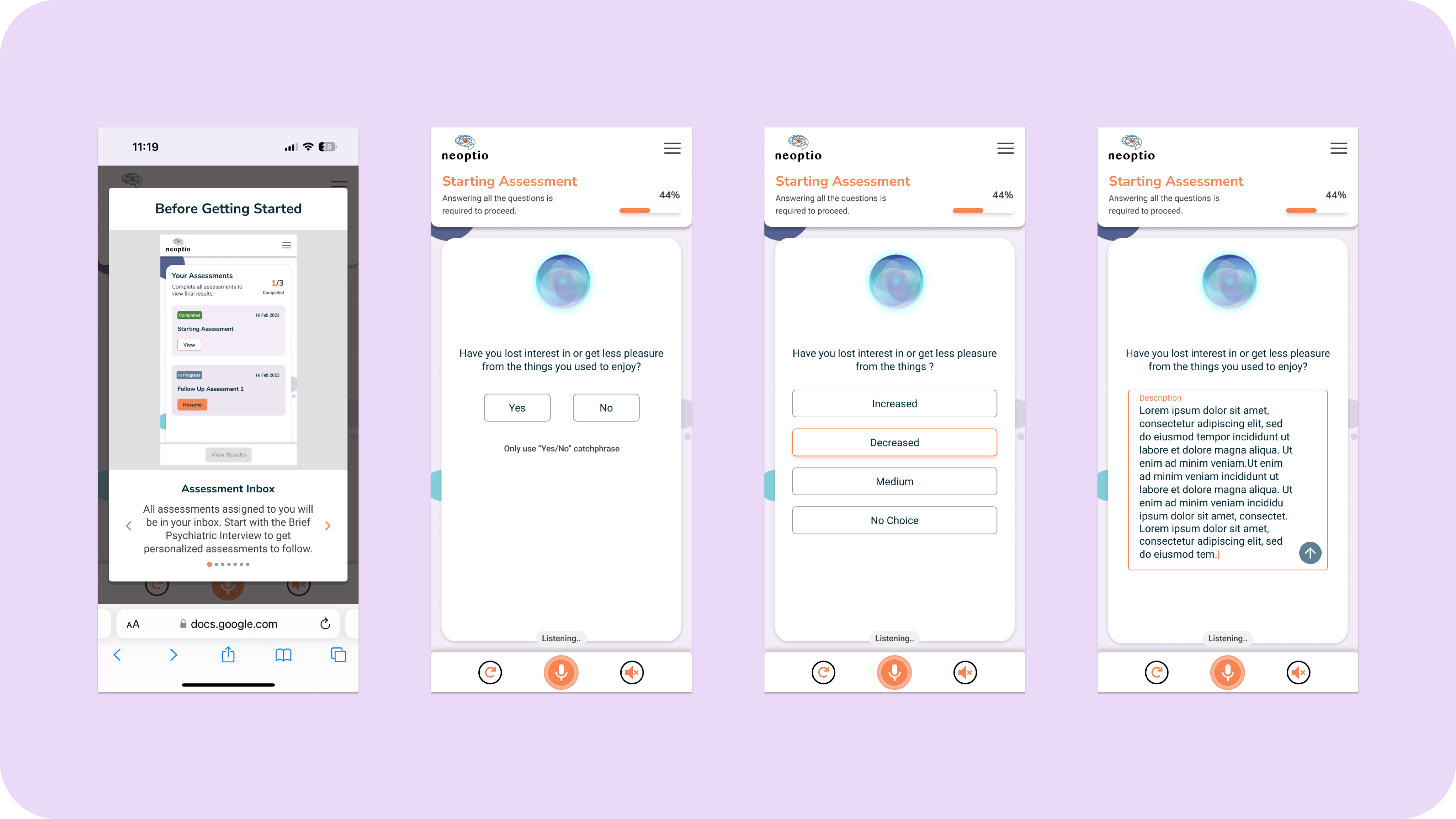
Ensure app accessibility for users with disabilities by adhering to accessibility guidelines. Incorporate language and cultural sensitivity into design and content to promote inclusivity, accommodating diverse linguistic and cultural backgrounds effectively.
Communicate assessment results clearly and empathetically, minimizing technical jargon. Offer actionable insights such as recommending consultation with healthcare professionals or providing resources for self-care and improvement based on assessment outcomes.
4. Style Guide
The modules in our application was inspired by Google’s Material Design, which uses more grid-based layouts, responsive animations and transitions, padding, and depth effects such as lighting and shadows. As for the colour scheme, we focused on creating a bright and vibrant palette with an iconic purple accent to convey a cheerful and light-hearted feel.
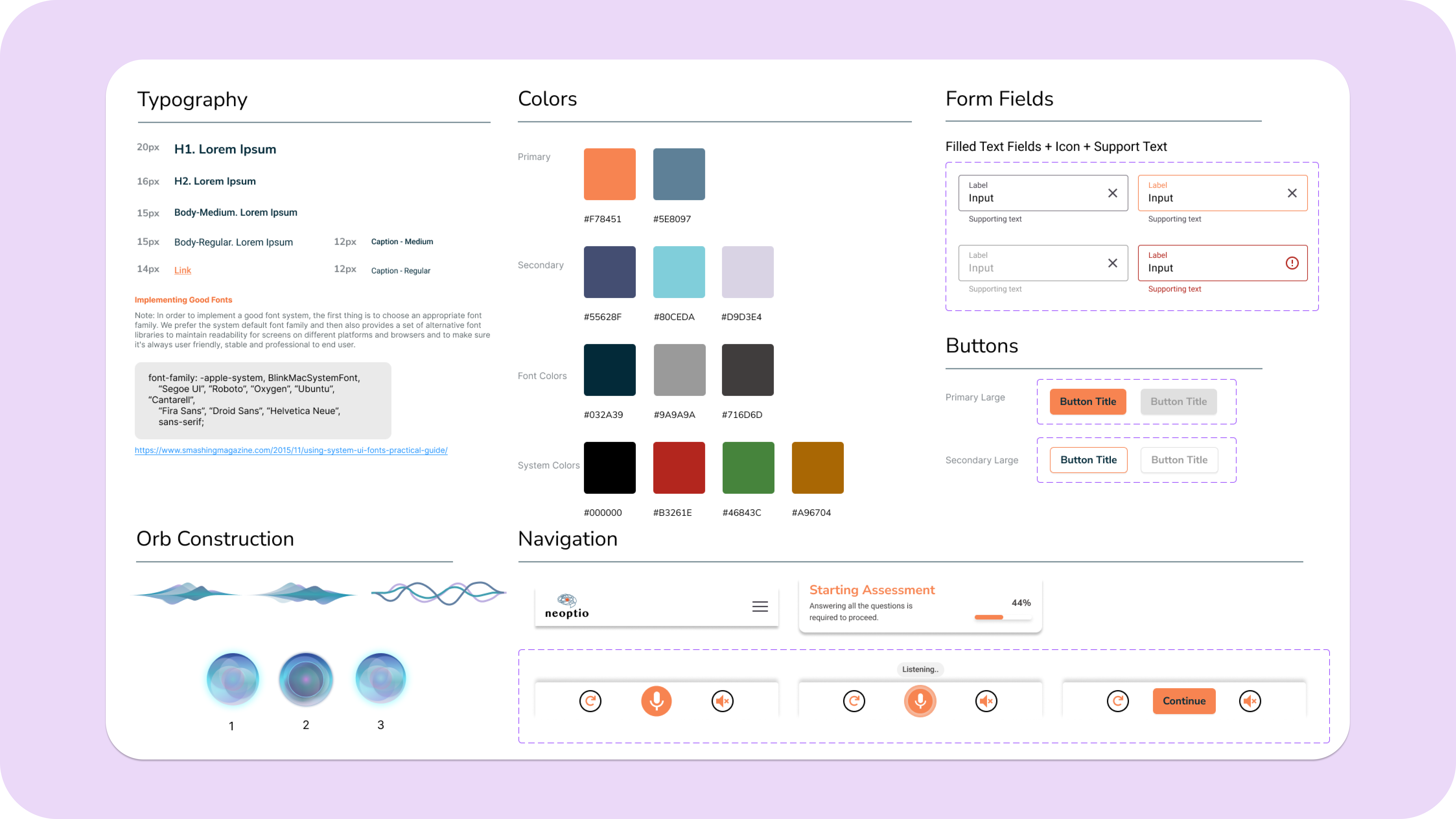
Overall, we wanted Neoptio to follow conventional mobile-application style guidelines so that it was easy for new users to learn the various interactions of the application, modelling the modularity of the application with the likes of Facebook, Instagram, some of the most commonly used applications amongst our target demographic.
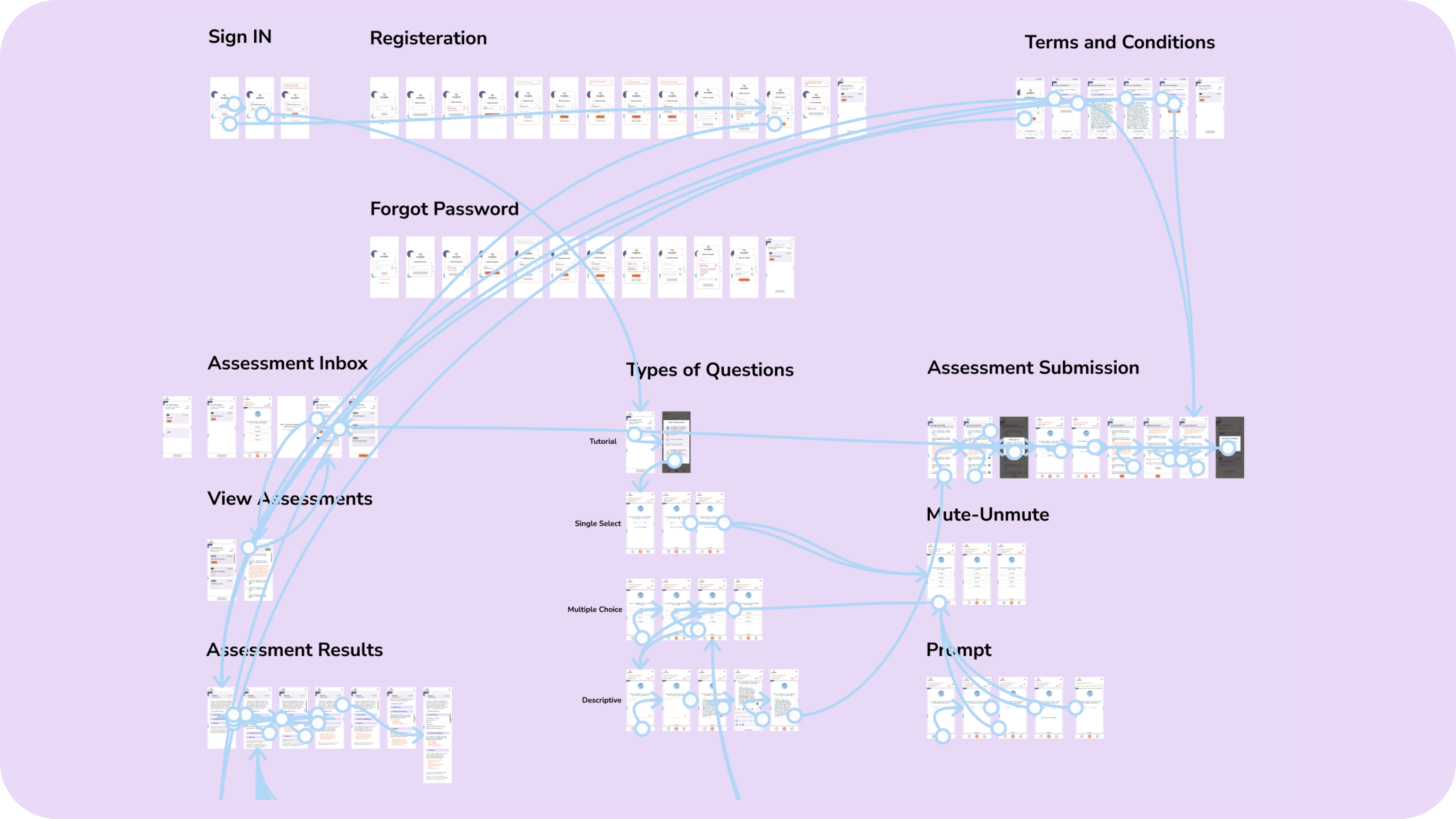
5. Prototyping
Prototyping helped us define a new design in the market by providing a tangible, interactive representation of the product. It allowed us to test and validate concepts early, identify usability issues, and gather user feedback before full-scale development. This iterative process helped refine functionality, aesthetics, and overall user experience, ensuring the design meet market needs and expectations. It also facilitated better communication among stakeholders, aligned vision and reduced misunderstanding. By detecting and addressing potential problems early, prototyping helped us save time and resources, ultimately leading to a more polished, user-centered final product that will be well-suited for the market.